Bamboo silk is a regenerated cellulose fiber created by extracting plant cellulose from Moso bamboo stalks and processing the cellulose pulp into a viscose yarn. Sarelli Interiors Textiles uses bamboo silk to add a high-luster finish to custom carpets, offering a visual alternative to natural mulberry silk at a lower material cost.
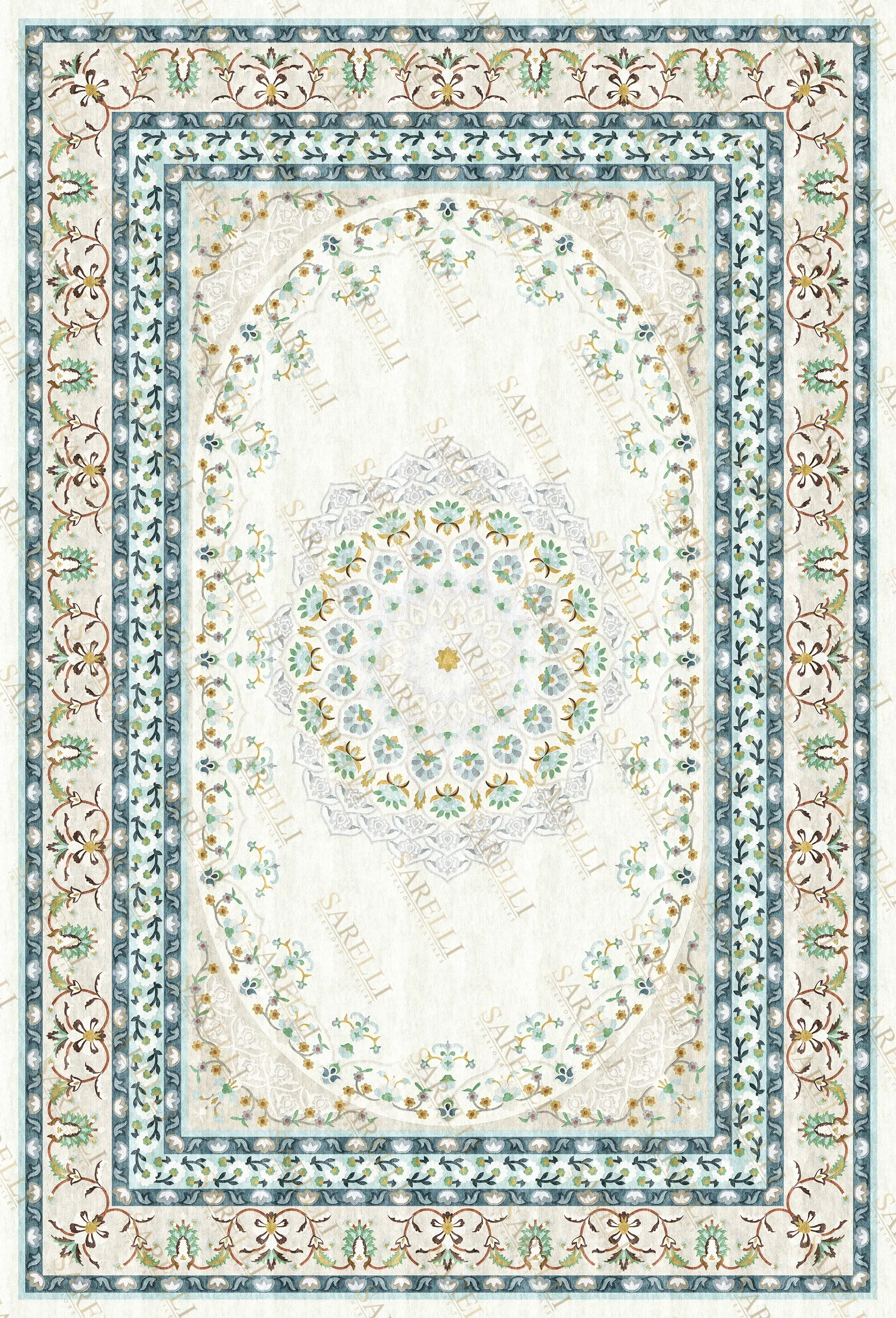
The term bamboo silk refers specifically to bamboo-derived viscose. Manufacturers harvest Moso bamboo plants after a four-year growth cycle. Workers crush the bamboo stalks into a pulp. The crushed bamboo pulp undergoes a chemical steeping process using sodium hydroxide at a 15 percent to 18 percent concentration. The sodium hydroxide dissolves the bamboo cellulose into an alkaline solution. Extrusion machines force the alkaline cellulose solution through spinnerets into a diluted sulfuric acid bath. The sulfuric acid bath hardens the liquid cellulose into continuous solid filaments. Textile workers spin the solid filaments into bamboo silk yarn.
Bamboo silk production stages and chemical processing
The bamboo silk production process requires 72 hours to convert raw bamboo stalks into spooled viscose yarn. Chemical processing facilities maintain strict temperature controls between 20 degrees Celsius and 25 degrees Celsius during the cellulose extraction phase to prevent fiber degradation.
Sarelli Interiors Textiles sources bamboo silk yarns processed through closed-loop chemical systems. Closed-loop systems recover up to 99 percent of the carbon disulfide solvent used during the cellulose dissolution stage. The recovered carbon disulfide solvent returns to the production cycle for subsequent bamboo pulp processing. Bamboo silk yarn achieves a standard density of 1.5 denier per filament. The 1.5 denier thickness provides a tensile strength of 2.5 grams per denier in dry conditions. Wet conditions reduce the tensile strength of bamboo silk by 30 percent to 50 percent. Rug manufacturers must account for the wet strength reduction during the carpet washing phase.
Bamboo silk physical properties and performance metrics
Bamboo silk exhibits a high refractive index, reflecting 85 percent of ambient room light to create a glossy surface sheen. The regenerated cellulose structure absorbs moisture rapidly, holding up to 13 percent of the fiber weight in water under standard atmospheric conditions.
Sarelli Interiors Textiles evaluates bamboo silk performance using standardized textile testing protocols. Bamboo silk carpets achieve a Martindale abrasion resistance rating of 15,000 cycles to 20,000 cycles before showing visible pile wear. The 15,000 to 20,000 cycle range makes bamboo silk suitable for medium-traffic residential applications. Natural mulberry silk achieves higher abrasion resistance, typically exceeding 25,000 Martindale cycles. Bamboo silk accepts reactive dyes at a 95 percent absorption rate. The high dye absorption rate allows bamboo silk to display deep saturated colors with a lightfastness rating of 4 out of 5 on the Blue Wool Scale. Direct sunlight exposure exceeding 500 hours will cause bamboo silk colors to fade by one grade on the Blue Wool Scale.
- Fiber composition: 100 percent regenerated plant cellulose.
- Dry tensile strength: 2.5 grams per denier.
- Moisture regain: 13 percent at 65 percent relative humidity.
- Dye absorption rate: 95 percent with reactive carpet dyes.
- Lightfastness: Grade 4 on the Blue Wool Scale.
Best uses for bamboo silk in luxury rugs
Sarelli Interiors Textiles recommends blending bamboo silk with New Zealand wool at a 30 percent bamboo to 70 percent wool ratio. The 30/70 blend maximizes the durability of the New Zealand wool while using the bamboo silk to highlight specific design motifs.
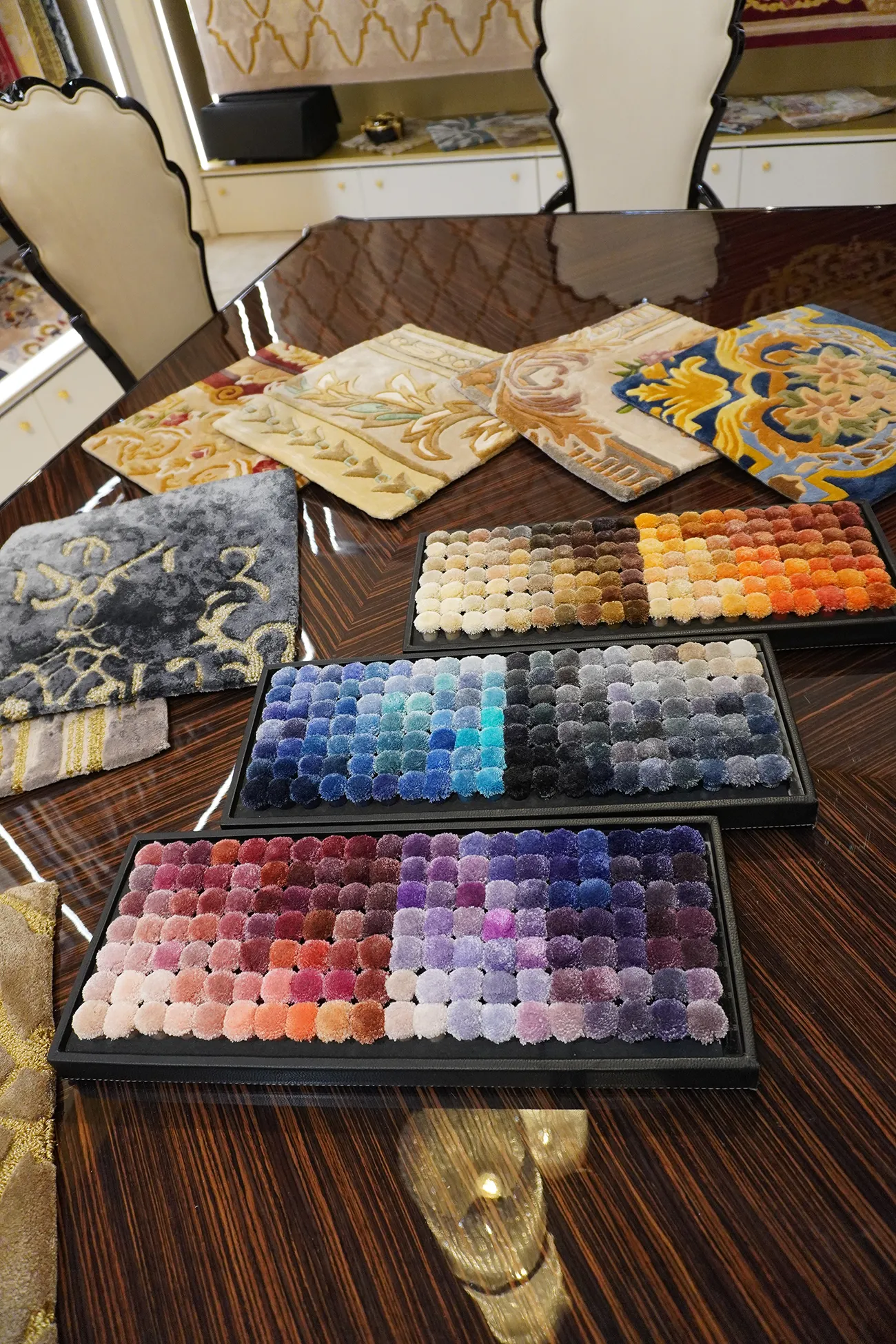
Clients frequently request bamboo silk accents in Hand-Tufted Production. Hand-tufted carpets featuring bamboo silk accents require a production lead time of 6 weeks to 8 weeks for a standard 6 square meter rug. Sarelli Interiors Textiles applies bamboo silk yarns at a pile height of 10 millimeters to 12 millimeters. The 12-millimeter pile height ensures the bamboo silk fibers reflect maximum light. Bespoke Customization projects often incorporate bamboo silk to create raised relief patterns. Artisans carve the wool pile down to 8 millimeters while leaving the bamboo silk pile at 10 millimeters. The 2-millimeter height difference creates a three-dimensional texture on the carpet surface.
Pure bamboo silk rugs exist, but 100 percent bamboo silk carpets lack the crush resistance of wool blends. A 100 percent bamboo silk rug weighing 4,500 grams per square meter (GSM) will show furniture indentations after 48 hours of static load compression. Sarelli Interiors Textiles advises clients to place pure bamboo silk rugs in low-traffic areas like formal living rooms or master bedrooms. Clients can view different material blends by exploring the Rug Materials guide. Customers visiting the Showroom can inspect the luster differences between bamboo silk, Tencel, and natural mulberry silk under various lighting conditions.
Bamboo silk cost comparison and project planning
Bamboo silk reduces custom rug material costs by 40 percent to 60 percent compared to natural mulberry silk. A hand-tufted rug featuring a 50 percent bamboo silk and 50 percent wool blend typically costs between 450 EUR and 650 EUR per square meter.
The exact price of a bamboo silk carpet depends on the knot count or tufting density. High-density hand-knotted rugs containing bamboo silk require 100 knots per square inch (KPSI) to 150 KPSI. The 150 KPSI density demands 120 hours of manual labor per square meter. Clients planning large-scale installations can review completed Projects to see how bamboo silk performs in hotel lobbies and luxury retail spaces. Sarelli Interiors Textiles provides physical yarn swatches to ensure accurate color matching. The Colors & Samples department ships bamboo silk color tufts within 72 hours of a client request. Buyers can browse the full Rugs Collection to identify patterns suitable for bamboo silk integration. For specific pricing on custom dimensions, clients should reach out via the Contact page.
Bamboo silk maintenance and cleaning requirements
Bamboo silk requires specialized dry cleaning methods because water exposure weakens the regenerated cellulose fibers. Professional rug cleaners must use low-moisture extraction systems operating with cleaning solutions calibrated to a neutral pH level of 6.5 to 7.5.
Liquid spills on bamboo silk carpets demand immediate attention to prevent permanent pile distortion. Owners must blot liquid spills using undyed cotton cloths within 3 minutes of the incident. Rubbing the wet bamboo silk pile causes the weakened cellulose filaments to break, resulting in a permanent fuzzy texture known as blooming. Sarelli Interiors Textiles strongly advises against using domestic carpet cleaning machines on bamboo silk rugs. Domestic carpet cleaning machines saturate the rug foundation with water exceeding 40 degrees Celsius. The 40-degree Celsius water dissolves the natural latex adhesives used in Rugs & Carpets manufacturing and causes the bamboo silk yarns to shrink by 3 percent to 5 percent. Professional cleaners dry bamboo silk rugs flat on elevated mesh racks in climate-controlled rooms. The drying rooms maintain a constant temperature of 28 degrees Celsius and a relative humidity below 45 percent to ensure the bamboo silk pile dries completely within 24 hours.