What is a tufted carpet and how does machine tufting work?
A tufted carpet consists of yarn pushed through a primary backing material using automated multi-needle machines that produce 500 to 2,000 square meters of carpet per day. Machine tufting creates uniform loop or cut pile surfaces designed specifically for high-volume commercial hotel installations and residential broadloom applications.
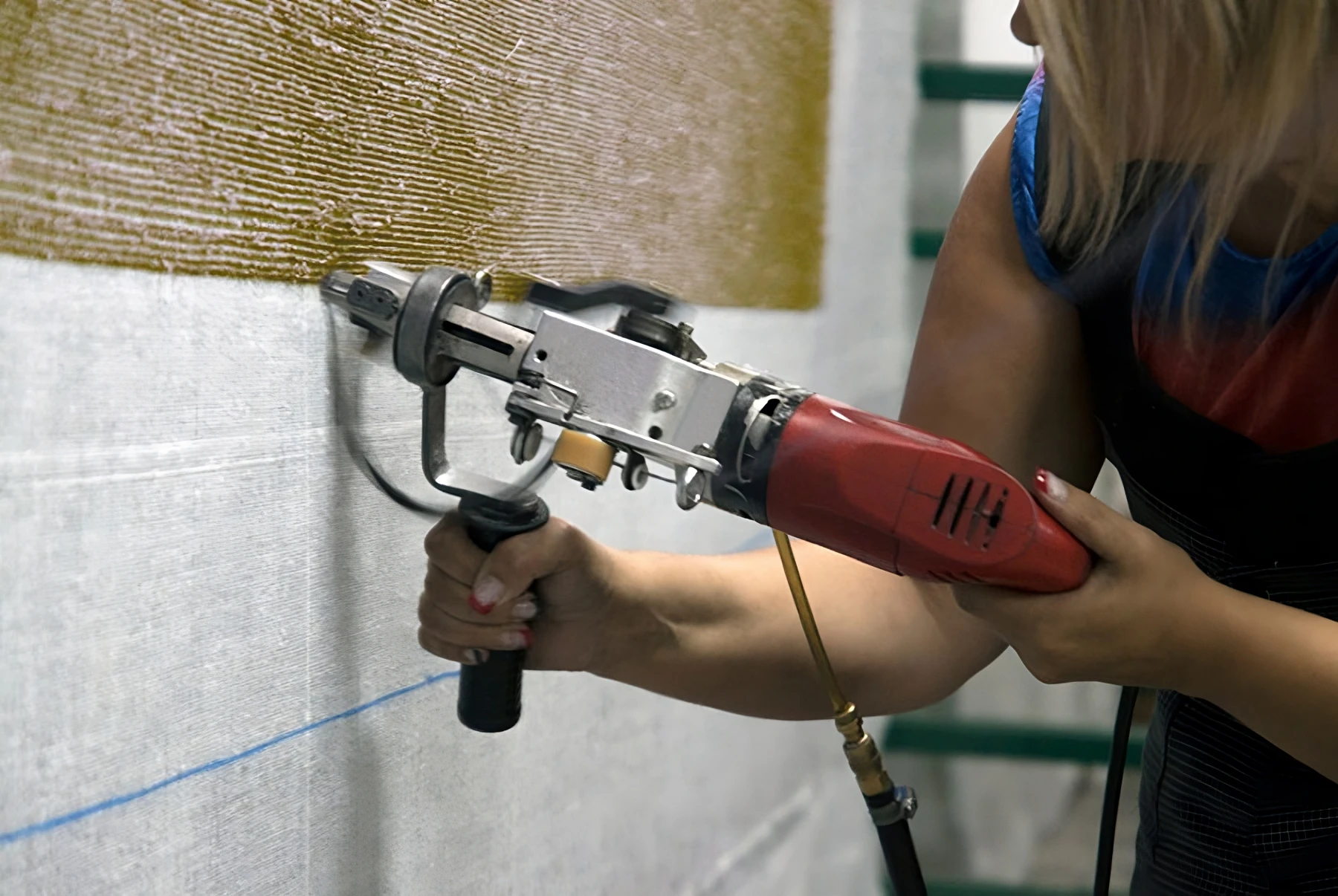
To answer the question of what is tufted carpet precisely, buyers must look at the mechanical insertion process. Automated tufting machines operate banks of hundreds of needles simultaneously across a width of up to four meters. The automated needles punch wool or synthetic yarn through a woven polypropylene backing at speeds reaching 1,200 stitches per minute. A secondary backing, usually made of jute or synthetic mesh, receives an application of styrene-butadiene rubber latex adhesive to lock the yarn loops in place. The carpet then passes through a heated curing oven operating at 120 degrees Celsius to dry the latex adhesive. Machine tufted carpet production requires large minimum order quantities, typically starting at 500 square meters per design run. Sarelli Interiors Textiles offers various Rugs & Carpets manufactured through both automated and manual methods.
Hand tufted carpet meaning and production specifics
The hand tufted carpet meaning refers to a manual production method where a single artisan uses a handheld pneumatic or manual tufting gun to punch individual yarn strands through a stretched canvas backing. Hand-tufting yields 0.5 to 1.5 square meters of finished carpet per day per artisan.
Hand-tufted carpets allow for unlimited design complexity, variable pile heights, and exact color matching. Artisans trace a specific design onto the primary cotton canvas backing cloth stretched tightly across a vertical metal or wooden frame. The artisan then shoots yarn through the backing following the traced pattern using a specialized pneumatic gun. Sarelli artisans use New Zealand wool, botanical silk, and Tencel yarns to create custom textures. Once the tufting process finishes, workers apply a natural latex coating to the back of the rug to secure the individual yarns. Workers then attach a heavy cotton secondary backing to protect the latex layer. After the backing dries, artisans shear the carpet surface using large rotary clippers to achieve a uniform pile height. Specialized carvers then use handheld scissors to cut bevels around specific design elements, creating a three-dimensional effect on the carpet surface. Buyers seeking exact dimensions and specific color palettes often choose Bespoke Customization for hand-tufted pieces. The manual technique allows Sarelli to produce single custom rugs without the 500-square-meter minimum required by automated machine tufting.
Production speed and density differences between machine and hand tufting
Machine tufting equipment produces broadloom carpet at a rate of 20 to 80 square meters per hour. Hand-tufting operates at a maximum speed of 1.5 square meters per eight-hour shift per artisan. Machine-tufted carpets typically feature a stitch density of 80,000 to 150,000 stitches per square meter using single-ply or two-ply yarns. Hand-tufted carpets achieve higher densities, ranging from 200,000 to 400,000 stitches per square meter depending on the yarn thickness and design requirements. Hand-tufted carpets often incorporate three-ply or four-ply yarns with high twist levels to increase durability. The increased density of hand-tufted rugs requires specific Rug Materials capable of withstanding tight compression on the tufting frame without breaking. Clients can view the density differences directly at the Sarelli Showroom by examining the back of the carpet samples.
Comparison table: machine tufted versus hand-tufted carpets
Machine tufted and hand-tufted carpets differ significantly across five primary metrics: production speed, stitch density, design complexity, retail price, and expected lifespan. The comparison table below outlines the exact quantitative differences between automated broadloom machine tufting and manual artisan hand-tufting methods.
| Metric | Machine Tufted Carpet | Hand-Tufted Carpet |
|---|---|---|
| Production Speed | 500 to 2,000 square meters per day | 0.5 to 1.5 square meters per day |
| Stitch Density | 80,000 to 150,000 stitches per square meter | 200,000 to 400,000 stitches per square meter |
| Design Complexity | Repeating geometric or linear patterns | Unlimited custom motifs and variable pile heights |
| Price Range | 30 EUR to 120 EUR per square meter | 250 EUR to 800 EUR per square meter |
| Expected Lifespan | 5 to 15 years | 25 to 40 years |
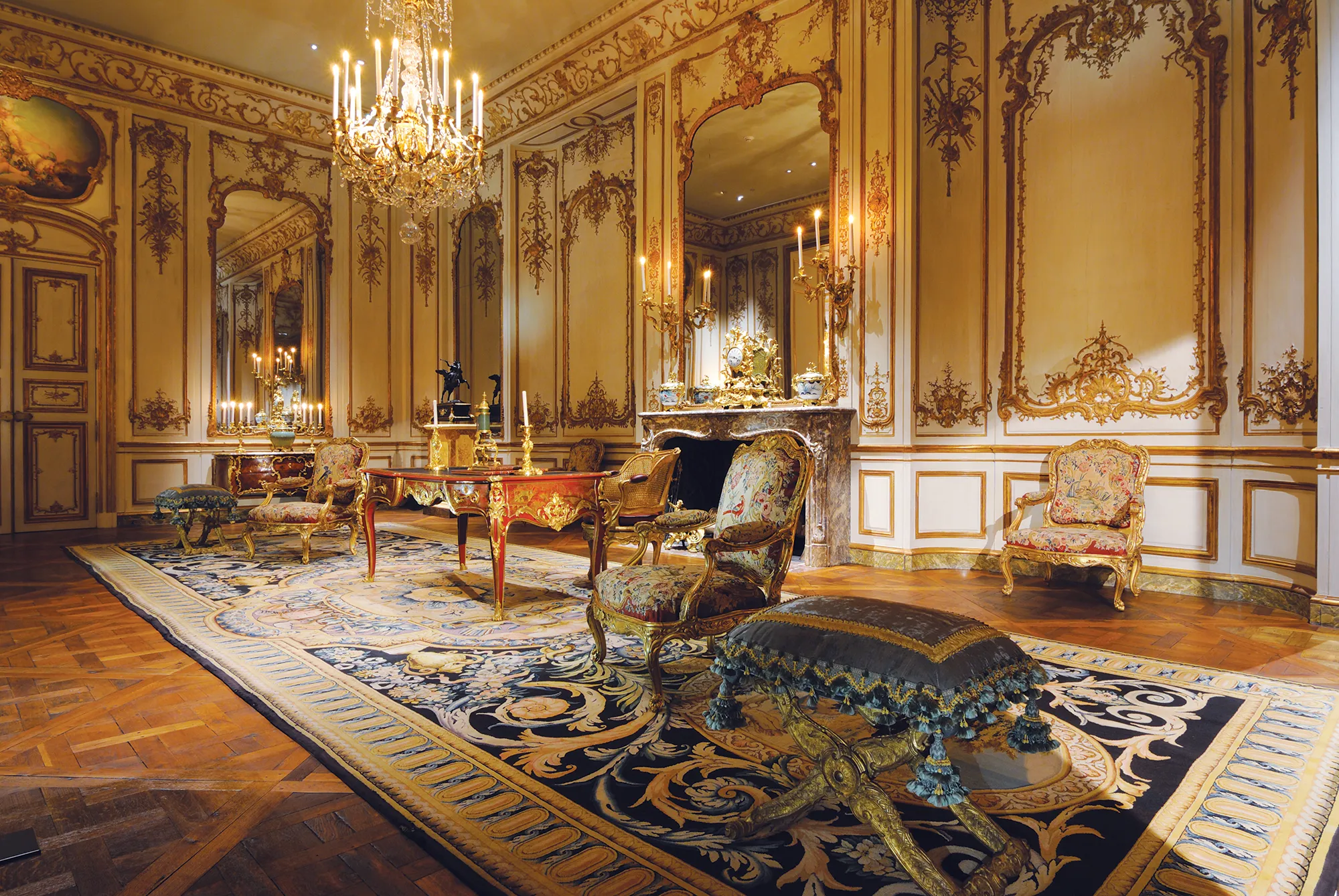
The data above demonstrates why commercial developers select machine tufting for large hotel corridors, while luxury residential designers specify Hand-Tufted Production for individual rooms. Buyers can browse the Sarelli Rugs Collection to see examples of both production methods.
Cost, lifespan, and application differences for Sarelli carpets
Machine tufted carpets cost between 30 EUR and 120 EUR per square meter and last 5 to 15 years under normal foot traffic. Hand-tufted carpets cost between 250 EUR and 800 EUR per square meter and maintain structural integrity for 25 to 40 years.
The price disparity between the two manufacturing methods stems directly from labor hours and material volume. A 12-square-meter machine tufted carpet requires less than five minutes of machine operating time. A 12-square-meter hand-tufted carpet requires 64 to 192 hours of manual artisan labor. Hand-tufted carpets also consume 30 percent to 50 percent more yarn per square meter than machine-tufted equivalents. Sarelli uses high-twist wool yarns weighing between 2,500 GSM and 4,500 GSM for hand-tufted projects. Machine-tufted carpets typically use yarns weighing between 800 GSM and 1,500 GSM.
Commercial property developers specify machine tufted carpets for hotel corridors, casino floors, and large corporate offices where budget constraints and rapid installation timelines dictate the material choice. Luxury residential designers specify hand-tufted carpets for private villas, boutique hotel lobbies, and executive boardrooms where unique aesthetics justify the higher investment. Designers working on large hospitality installations can review Sarelli Projects to see how different carpet types perform in high-traffic environments. Clients needing exact dye matching for hand-tufted orders must request physical Colors & Samples before production begins. For specific pricing on custom dimensions, clients should Contact the Sarelli sales team directly.