The sheer density meaning refers to the structural thread count of a translucent textile, measured in Ends Per Inch (EPI) and Picks Per Inch (PPI), rather than the physical weight of the material. Sarelli Interiors Textiles uses sheer density metrics to determine the visual fineness of the weave structure.
Textile professionals measure sheer density by counting the vertical warp threads (EPI) and horizontal weft threads (PPI) within a one-inch square of fabric. A standard linen voile produced by Sarelli Interiors Textiles contains 60 EPI and 50 PPI. The sheer density metric dictates how tightly the individual yarns pack together on the loom. Buyers often confuse sheer density with fabric opacity. Fabric opacity depends entirely on the Grams per Square Meter (GSM) weight and the yarn thickness. Quality control inspectors at Sarelli Interiors Textiles verify the sheer density meaning by placing a specialized magnifying glass called a pick glass over the finished textile. The pick glass isolates exactly 2.54 centimeters of the fabric surface. The inspector manually counts the 60 warp threads and 50 weft threads to confirm the production batch matches the technical specifications. Sarelli Fabrics specifies both EPI/PPI counts and GSM weights for all translucent window treatments.
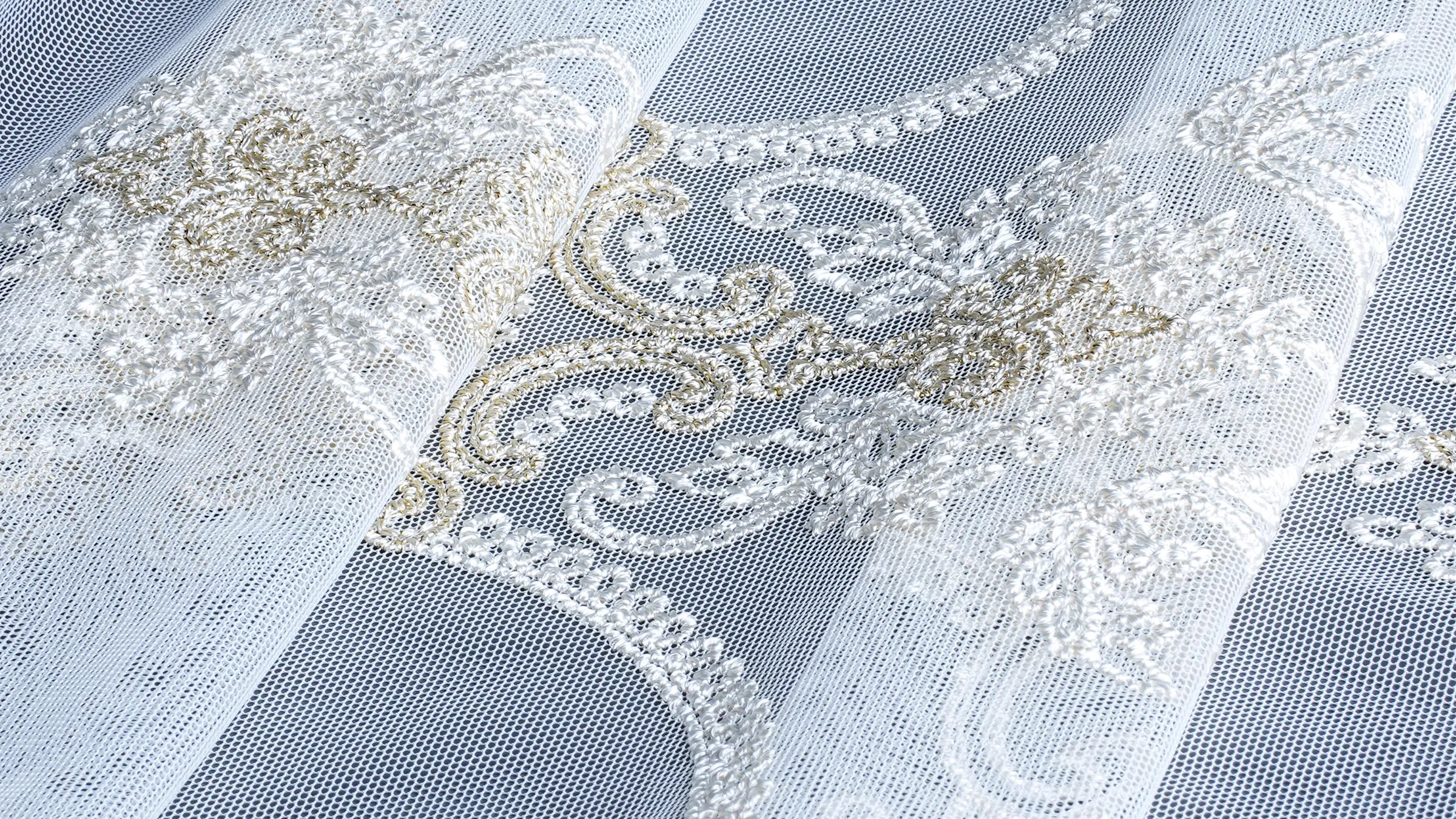
How sheer density relates to weave appearance versus opacity
High sheer density creates a visually smooth fabric surface with microscopic gaps between threads, while low sheer density produces an open, net-like appearance. The sheer density controls the texture of the textile, whereas the Grams per Square Meter (GSM) measurement controls how much light passes through the material.
A silk organza fabric woven at 120 EPI and 100 PPI features an extremely high sheer density. The 120 EPI silk organza maintains complete transparency because the individual silk filaments measure only 15 denier in thickness. The resulting textile weighs just 25 GSM. The 120 EPI silk organza allows 85 percent of visible light to pass through the window opening. Conversely, a loose linen casement fabric features a low sheer density of 30 EPI and 25 PPI. The 30 EPI linen casement blocks 40 percent of incoming sunlight because the thick linen yarns push the fabric weight to 150 GSM. The 30 EPI linen casement allows only 60 percent of visible light to pass through the window opening. Sarelli engineers measure this light transmission using a spectrophotometer. Interior designers must evaluate both the thread density and the GSM weight to predict how Sheer Fabrics Production methods will affect the final window treatment.
Standard sheer density metrics used in Sarelli Fabrics
Sarelli Interiors Textiles categorizes sheer fabrics into three distinct density classifications based on warp and weft counts. The classifications include open-weave casements under 40 EPI, standard voiles between 40 EPI and 80 EPI, and ultra-fine organzas exceeding 80 EPI.
The specific thread counts determine the manufacturing time and the material costs. Open-weave casements require 4 hours of loom time per 50 linear meters. Standard voiles require 8 hours of loom time per 50 linear meters. Ultra-fine organzas demand 14 hours of loom time per 50 linear meters. A standard Sarelli polyester batiste sheer features a density of 85 EPI and 70 PPI, weighs 65 GSM, and costs 45 EUR per linear meter at a 300 cm width. The 85 EPI polyester batiste requires a 20 denier yarn size to fit 85 individual threads into a single inch of space. The Sarelli premium silk organza sheer contains 110 EPI and 90 PPI, weighs 22 GSM (equivalent to 5 momme), and requires a 6-week production lead time for custom dye lots. The 110 EPI silk organza requires an even finer 15 denier yarn size. Understanding the Fabrics Composition helps specifiers match the correct sheer density to the required structural performance. Natural fibers like cotton and linen typically max out at 70 EPI because yarn friction causes breakage during weaving. Synthetic fibers like Trevira CS achieve densities up to 140 EPI without breaking on the Jacquard loom.
Calculating sheer fabric specifications for interior projects
Specifying sheer textiles requires matching the sheer density and GSM weight to the architectural requirements of the window opening. Sarelli Interiors Textiles recommends a minimum sheer density of 60 EPI for commercial drapery to ensure the fabric withstands repeated opening and closing cycles.
Commercial window treatments face rigorous physical demands. A sheer fabric with fewer than 50 EPI lacks the structural integrity to hold pleating tape securely over 10,000 mechanical traverse cycles. The low thread count causes the sewing needles to separate the yarns rather than pierce them, which leads to seam slippage under a 5-kilogram load.
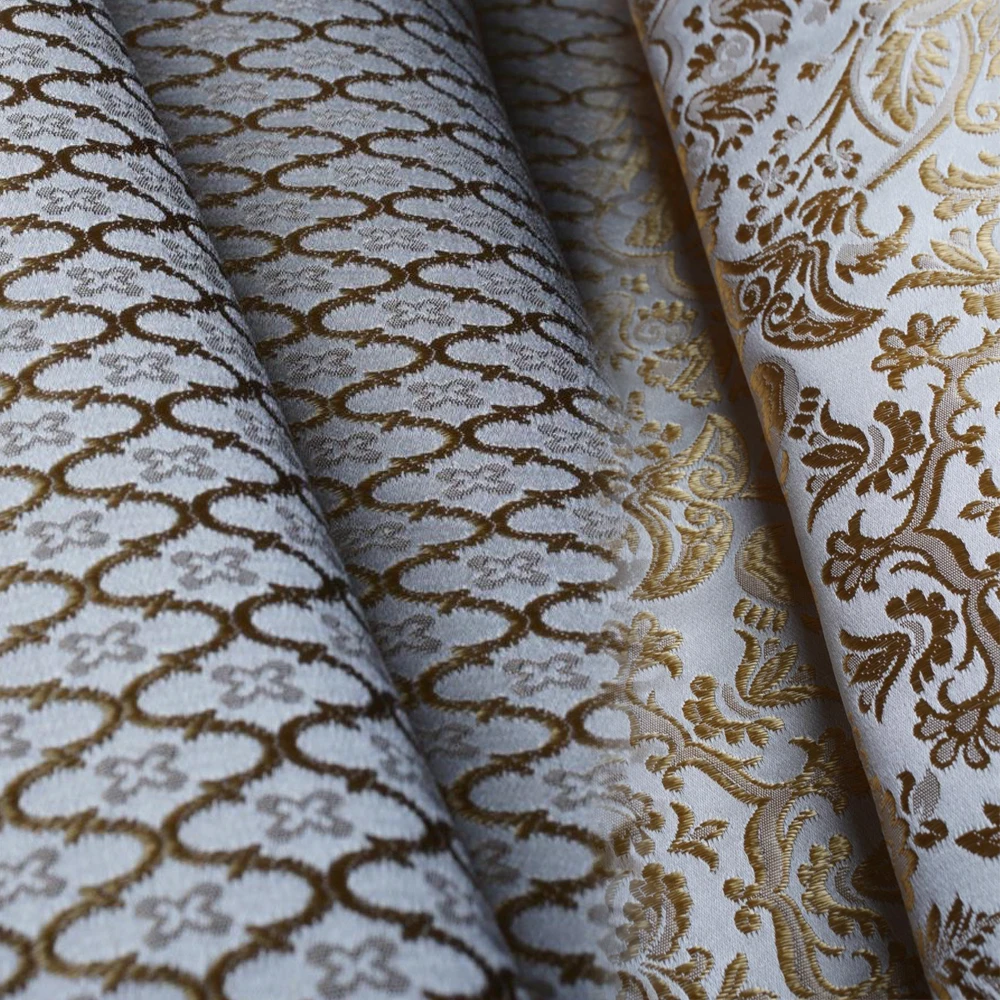
Sarelli Trevira CS commercial sheers maintain a density of 75 EPI and 65 PPI, weigh 85 GSM, and pass the NFPA 701 fire retardancy test after 50 commercial washing cycles. Custom residential linen sheers woven by Sarelli feature a density of 45 EPI and 40 PPI, weigh 110 GSM, and ship in 50-meter rolls measuring 320 cm in width to allow for seamless continuous drapery construction. Specifiers review exact density specifications for all current patterns in the fabrics collection. The manufacturing facility adjusts the loom settings based on the chosen Production Methods to maintain consistent sheer density across different dye lots.
Evaluating sheer density for acoustic and thermal performance
Sheer density directly influences the acoustic absorption and thermal retention properties of translucent window treatments. Fabrics with a sheer density above 80 EPI trap microscopic layers of air between the yarns, which improves the Noise Reduction Coefficient (NRC) of the textile.
Acoustic sheers represent a specialized category of window treatments. The Sarelli acoustic sheer collection features a density of 95 EPI and 85 PPI combined with a specialized flat-ribbon Trevira yarn to achieve an NRC rating of 0.45 under ISO 354 testing conditions while maintaining 60 percent visual light transmission. Sarelli thermal sheers feature a density of 100 EPI and 80 PPI, weigh 95 GSM, and reflect 45 percent of solar heat gain when installed 15 cm away from double-glazed architectural glass. Clients examine the acoustic and thermal sheer options physically by visiting the Showroom. Sarelli representatives provide technical data sheets detailing the exact EPI, PPI, and GSM for every textile.