Damask fabric and carpet represent a reversible figured weave characterized by a contrast between a warp-faced satin background and a weft-faced sateen pattern. Sarelli Interiors Textiles produces damask textiles featuring pattern repeats up to 4 meters, employing silk, cotton, or wool yarns woven at densities exceeding 120 threads per square centimeter.
Damask Origin and Historical Development in the 12th Century
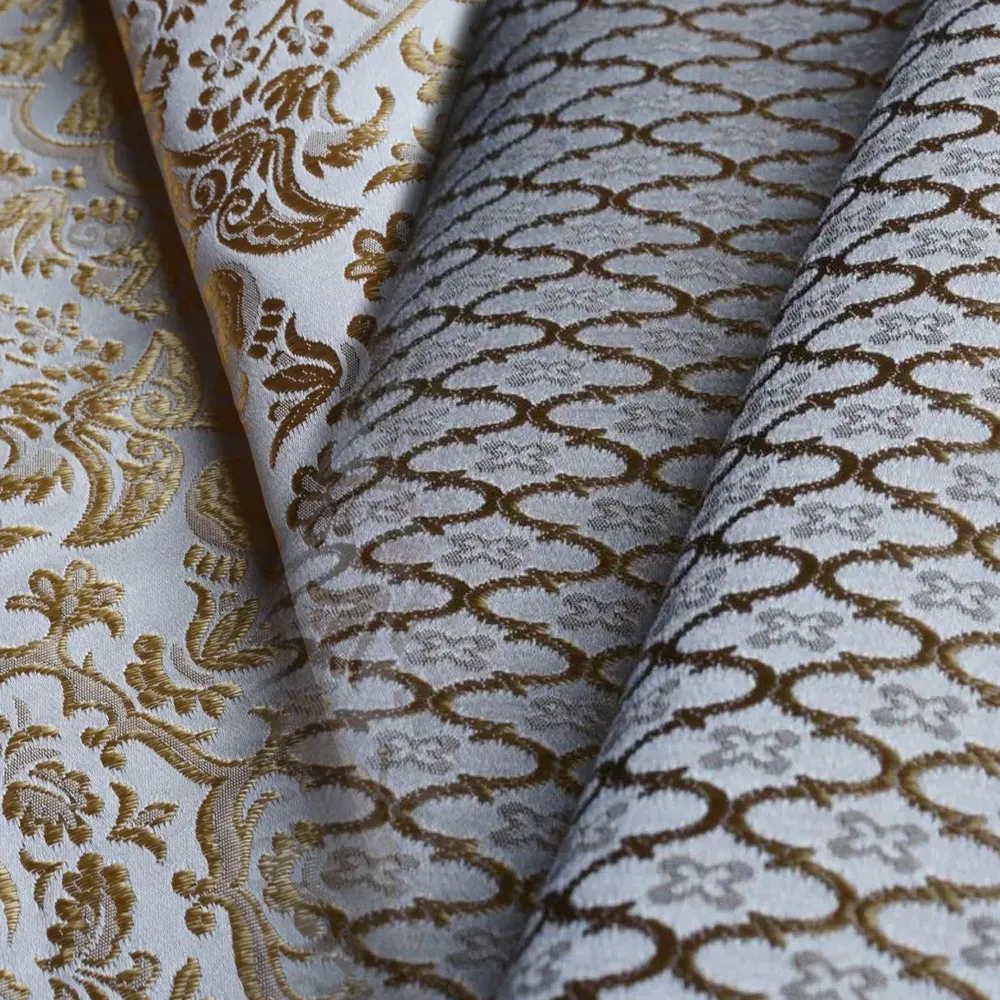
The term damask derives from the city of Damascus, Syria, where weavers perfected the reversible figured weave during the 12th century. Historical records indicate that European merchants imported these textiles, often referring to the material as damasque in early French trade documents dating to 1343. The early damasque textiles consisted exclusively of silk yarns weighing between 16 momme and 22 momme, imported through established Mediterranean trade routes. By the 15th century, Italian weaving centers in Venice and Genoa adopted the damask technique for local production. Sarelli Interiors Textiles studies these historical damask archives to replicate 16th-century patterns using modern electronic Jacquard looms. The original damask construction requires a single warp system and a single weft system. The weaver creates the pattern by alternating the satin weave structure across the fabric surface. The background of the damask fabric typically features a five-shaft warp-faced satin weave. The pattern of the damask fabric features a corresponding five-shaft weft-faced sateen weave. Light reflects differently off the longitudinal warp threads compared to the transverse weft threads, creating the signature damask visual contrast without requiring multiple dye colors.
Reversible Figured Weave and Satin Contrast Mechanics
The technical definition of a true damask requires a reversible figured weave structure. The reversible figured weave relies on the perpendicular intersection of warp threads and weft threads under specific tension parameters. Sarelli Interiors Textiles engineers damask fabrics with a warp density of 80 ends per centimeter and a weft density of 40 picks per centimeter. A thread density of 80 ends and 40 picks yields a finished fabric weight of 280 GSM (grams per square meter). The warp-faced satin contrast occurs because the warp threads float over four weft threads before interlacing under one weft thread in a 4/1 satin weave structure. The weft-faced sateen pattern reverses the interlacing ratio to a 1/4 structure, allowing the weft threads to float over four warp threads. Sarelli Interiors Textiles tests the abrasion resistance of these damask weaves, achieving results of 35,000 Martindale cycles for residential upholstery applications. The reversible nature of the damask weave means the fabric presents a positive image on the face side and a negative image on the reverse side. Interior designers specify Sarelli damask textiles for window treatments because both sides of the fabric offer a finished appearance. Customers can review the exact material specifications in the Fabrics Composition guide.
Italian Damask Fabric Production at Sarelli Interiors Textiles
Sarelli Interiors Textiles manufactures italian damask fabric using Staubli electronic Jacquard looms located in Northern Italy. The production of italian damask fabric requires precise tension control across 12,000 individual warp ends. Sarelli technicians program the electronic Jacquard heads to lift specific warp threads at speeds reaching 600 picks per minute, executing complex floral and geometric motifs without manual intervention. The high-speed weaving process allows Sarelli Interiors Textiles to produce up to 45 linear meters of italian damask fabric per eight-hour shift. The Production Methods employed by Sarelli include a specialized finishing process that applies a calendering treatment at 140 degrees Celsius under 50 bars of pressure. The calendering treatment flattens the floating yarns, increasing the light reflectance of the warp-faced satin contrast by 30 percent. Sarelli Interiors Textiles also adapts the damask weave structure for lightweight window treatments. The Sheer Fabrics Production division creates translucent damask patterns using fine organza silk yarns weighing 8 momme. The sheer damask variants maintain the reversible figured weave while allowing 65 percent light transmission through the warp-faced satin background. Clients can explore the full catalog of heavy and lightweight damask options within the fabrics collection.
Damask Applications in Tappeti Damascati and Carpets
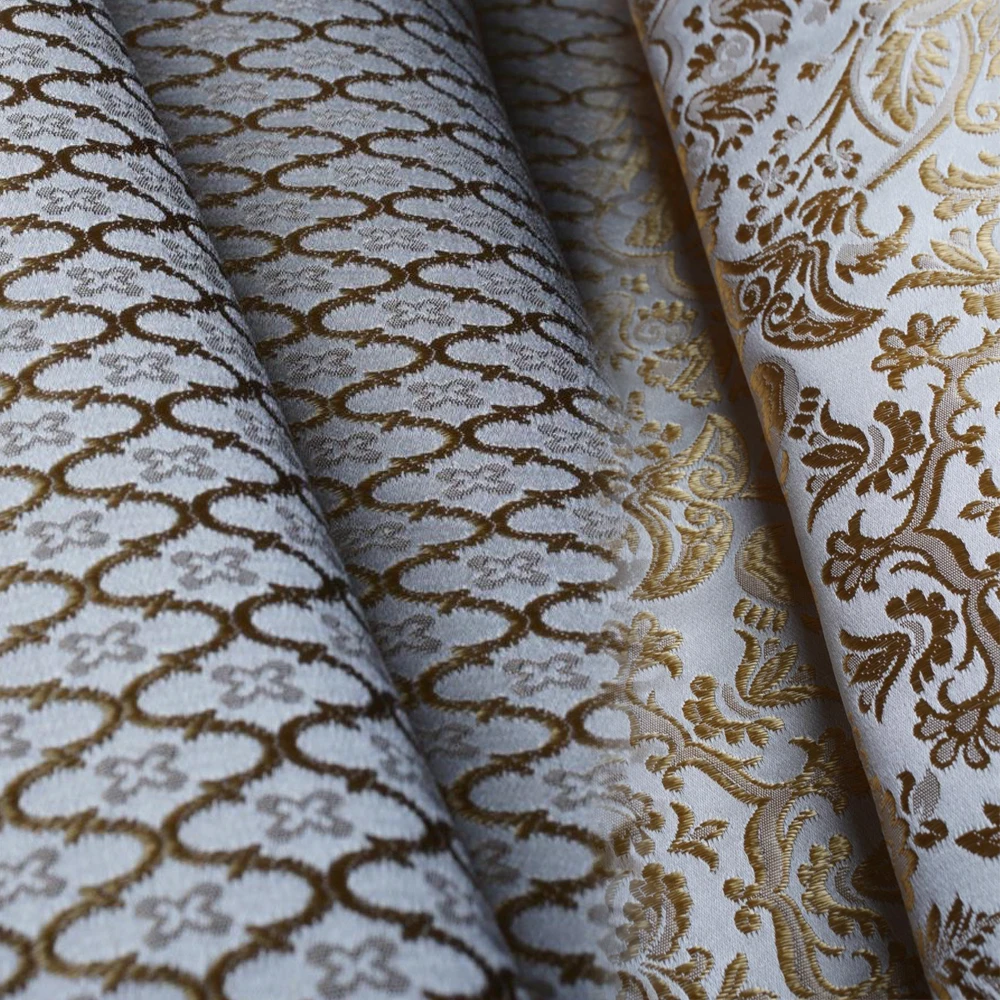
The damask pattern extends beyond woven fabrics into the production of luxury floor coverings, specifically known in the Italian market as tappeti damascati. Sarelli Interiors Textiles designs tappeti damascati using hand-tufting and hand-knotting techniques to replicate the visual effect of the reversible figured weave. A standard Sarelli damask carpet features a knot density of 150,000 knots per square meter. The carpet artisans create the warp-faced satin contrast effect by mixing different yarn materials within the pile. The background of the tappeti damascati consists of matte New Zealand wool dyed to a specific color value on the CIELAB scale, while the raised damask pattern consists of high-luster botanical silk dyed to an identical color value. The botanical silk reflects light similarly to the floating weft threads in a traditional damask fabric. Sarelli Interiors Textiles produces custom tappeti damascati with a pile height of 12 millimeters for the wool background and 14 millimeters for the silk pattern. A 2-millimeter height differential enhances the three-dimensional appearance of the damask motif. The production lead time for a 12-square-meter custom damask carpet averages 14 weeks. The base cost for custom tappeti damascati starts at 850 EUR per square meter. Sarelli Interiors Textiles frequently installs these custom damask carpets in luxury hospitality environments, as detailed in the Projects portfolio.
Sarelli Fabrics Specification and Ordering
Sarelli Fabrics offers damask textiles in standard roll lengths of 50 linear meters. The standard usable width of Sarelli damask fabric measures 140 centimeters. Sarelli Interiors Textiles requires a minimum order quantity of 10 linear meters for custom dye lots. The custom dyeing process adds 3 weeks to the standard 4-week production lead time. Interior designers can view physical samples of the reversible figured weave at the Sarelli Showroom in Milan. The showroom displays over 200 damask variations, including historical 12th-century Damascus reproductions and contemporary geometric interpretations. Clients requiring technical data sheets for commercial fire retardancy certification should reach out via the Contact portal. Sarelli Interiors Textiles provides Trevira CS damask fabrics that pass the EN 13773 Class 1 flammability standard for public spaces, maintaining a weight of 320 GSM for contract upholstery applications.