Sarelli Interiors Textiles offers certified-sustainable fibers for bespoke commissions, including Global Organic Textile Standard (GOTS) pure new wool, bamboo silk, TENCEL Lyocell, and botanical silk. Clients can specify the organic materials for any hand-tufted carpet design. Sarelli pairs the eco-friendly surface fibers with natural latex adhesives and 100 percent organic cotton backings to create fully biodegradable floor coverings.
Certified-sustainable wool options for custom organic rugs
Clients commissioning Rugs & Carpets frequently select GOTS-certified pure new wool as the primary pile material. Sarelli sources the organic wool from Italian Apennine flocks raised without synthetic parasiticides. The raw wool fibers measure between 28 and 32 microns in thickness, providing high durability for residential and commercial floor traffic. Sarelli spinners process the organic wool using mechanical carding methods rather than chemical carbonization.
Custom organic rugs constructed from untreated wool achieve a pile density of 3.5 kilograms per square meter. The GOTS-certified wool withstands 50,000 Martindale abrasion cycles, qualifying the material for heavy commercial use. The natural lanolin content within the Apennine wool fibers repels water-based stains for up to 20 minutes before absorption occurs. Sarelli guarantees the structural integrity of the wool fibers for 15 years under standard indoor conditions. Buyers can review the wool specifications through the Rug Materials guide.
Plant-based alternatives: Bamboo silk, TENCEL, and botanical silk
Sarelli provides several cellulose-based fibers for clients seeking a lustrous finish without using animal products. Bamboo silk serves as a highly renewable alternative to traditional mulberry silk. The bamboo plant reaches maturity in 3 to 4 years, requires zero artificial irrigation, and regenerates automatically from the root system after harvest. Sarelli weavers incorporate bamboo silk at a density of 80 knots per square inch to create a reflective surface texture. The bamboo cellulose undergoes a closed-loop viscose process that recycles 95 percent of the sodium hydroxide solvent.
TENCEL Lyocell represents another sustainable option for custom rug commissions. The Austrian manufacturer Lenzing produces TENCEL fibers from sustainably harvested eucalyptus wood pulp using a closed-loop solvent recovery process. The closed-loop system captures and reuses 99.6 percent of the organic solvent and water required for extrusion. TENCEL fibers absorb moisture 50 percent more efficiently than standard cotton, regulating ambient room humidity.
Botanical silk, often referred to in the textile industry as eco silk, derives from the cellulose of lotus plant stems. Sarelli artisans extract the lotus fibers manually within 24 hours of harvesting the stems, yielding a yarn that weighs 50 grams per 10,000 meters. The resulting eco silk pile reflects light similarly to a 19-momme traditional silk but maintains a 100 percent vegan composition. The lotus fiber possesses a natural tensile strength of 4.5 grams per denier, making the eco silk highly resistant to snapping under tension. Designers can evaluate the plant-based fibers by requesting physical swatches via the Colors & Samples department.
Natural dyes and organic cotton backings for hand-tufted production
The sustainability of a custom rug depends heavily on the dyeing process and the foundation materials. Sarelli uses heavy-metal-free reactive dyes for all organic fiber commissions. The reactive dyes bond with the wool and cellulose molecules at 60 degrees Celsius, requiring 40 percent less thermal energy than conventional acid dyes. The dyeing facility treats 100 percent of the wastewater through a multi-stage biological filtration system before releasing the water back into the municipal grid.
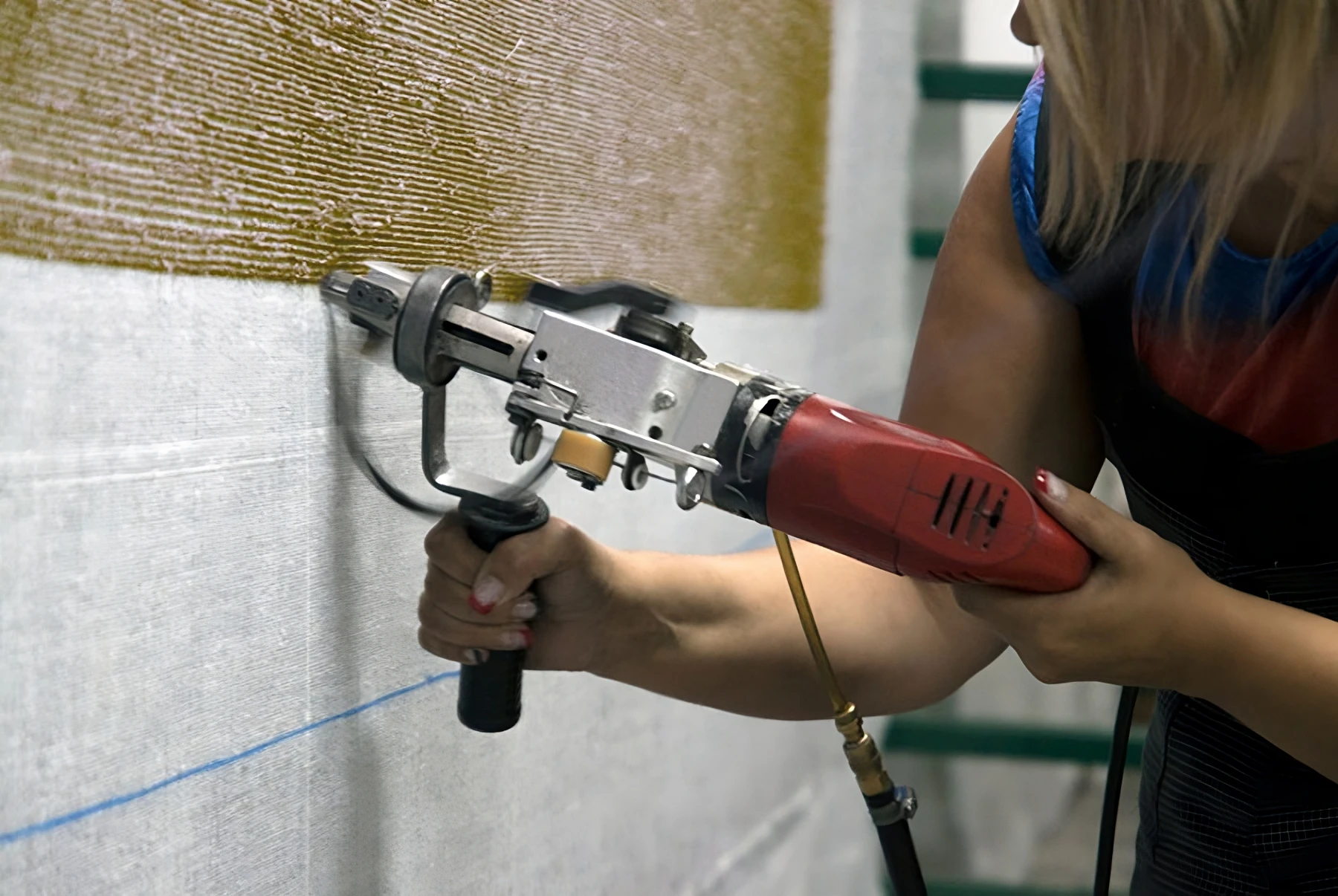
For the structural foundation, Hand-Tufted Production relies on a primary canvas woven from unbleached organic cotton. The cotton canvas weighs 350 grams per square meter (GSM), providing a rigid matrix for the tufting gun. Sarelli weavers stretch the organic canvas across a 5-meter by 6-meter vertical aluminum frame to maintain exact tension during the tufting process. Sarelli secures the tufted yarns to the primary canvas using a natural liquid latex tapped from Hevea brasiliensis trees grown on Forest Stewardship Council (FSC) certified plantations. The natural latex cures at room temperature over 48 hours, emitting zero volatile organic compounds (VOCs) during the drying phase. A secondary backing of 250 GSM organic cotton duck cloth conceals the latex layer and protects the flooring surface beneath the rug.

Lead times and pricing for sustainable custom rugs
Specifying organic materials alters the production timeline and the final cost of a bespoke carpet. Sarelli requires 10 to 12 weeks to complete a standard 3-meter by 4-meter custom organic rug. The hand-tufting process consumes 120 artisan hours, while the natural latex curing adds a mandatory 48-hour resting period.
| Fiber Material | Source Origin | Pile Density (GSM) | Base Price (EUR/m²) |
|---|---|---|---|
| Pure New Wool | Italian Apennines | 3,500 | 450 |
| Bamboo Silk | Bamboo Cellulose | 4,200 | 520 |
| TENCEL Lyocell | Eucalyptus Wood Pulp | 4,000 | 580 |
| Botanical Silk | Lotus Plant Stems | 3,800 | 850 |
The pricing for organic wool carpets begins at 450 EUR per square meter. Carpets featuring a 50 percent blend of organic wool and TENCEL cost 580 EUR per square meter. Full-pile botanical silk designs cost 850 EUR per square meter because of the labor-intensive lotus fiber extraction. Sarelli calculates shipping costs based on the final volumetric weight, with a 12-square-meter organic wool rug weighing approximately 42 kilograms. Clients can view completed sustainable commissions in the Projects portfolio or inspect the fibers in person at the Sarelli Showroom. For exact quotes on specific dimensions, buyers should reach out to the Contact team. The complete catalog of standard designs available in organic fibers appears in the luxury rugs collection.
Clients seeking additional modifications to the pile height or shape can request a consultation through the bespoke rug service.