Luxury Fabric Production Stages at Sarelli Textiles
The Sarelli Fabrics catalog features textiles created through a strict luxury fabric production sequence that transforms raw silk and cotton yarns into finished interior textiles. The production process requires 120 to 180 hours per 50-meter roll and involves yarn selection, dyeing, warping, drawing-in, weaving, finishing, quality control, and roll preparation.
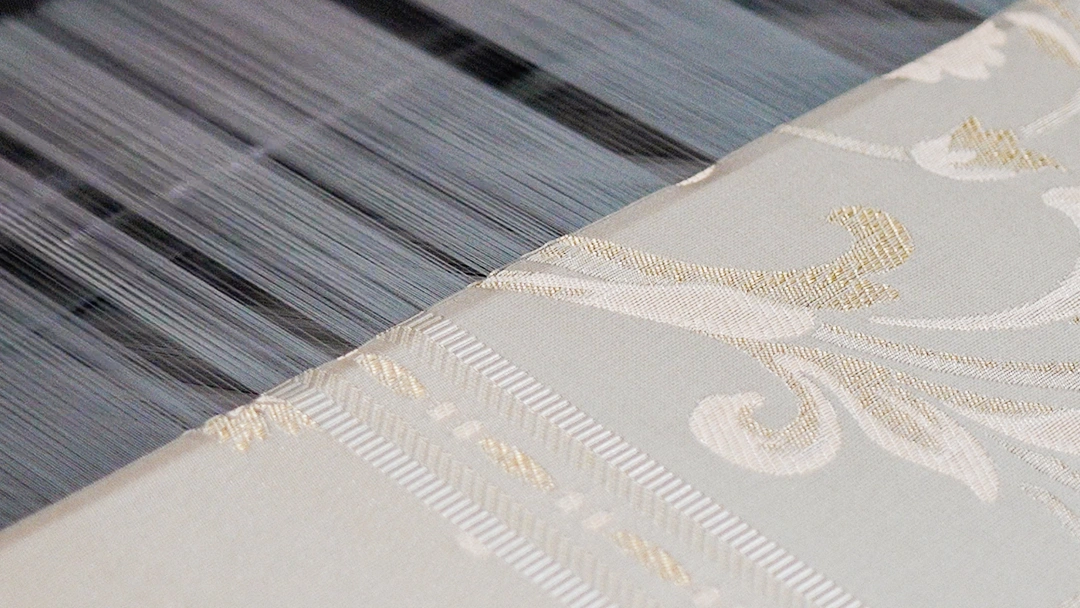
Stage 1: Sarelli Textiles Selects Raw Yarns for Production Tissus de Luxe
The first stage of production tissus de luxe involves sourcing and testing raw fibers. Sarelli Textiles imports Grade 6A mulberry silk from specialized sericulture farms at a cost of 120 EUR per kilogram. Sarelli Textiles also imports long-staple Egyptian cotton measuring 32 to 34 millimeters in fiber length. Technicians test the raw yarn tensile strength using a dynamometer calibrated to apply 50 Newtons of force. Yarn batches that fail to meet the 98 percent tensile consistency threshold face immediate rejection. The Fabrics Composition department catalogs approved yarns by weight, ranging from 20 momme silk threads to 80 GSM cotton blends, storing the yarns in climate-controlled silos at 18 degrees Celsius.
Stage 2: Dyeing Facilities Process Yarns at 130 Degrees Celsius
Sarelli Textiles dyes yarns before weaving to ensure maximum color penetration and fade resistance. The dyeing facility processes yarn batches in pressurized vats at 130 degrees Celsius for 45 minutes under 3 bars of pressure. Color technicians match the dyed yarns to specific Pantone textile codes within a 0.5 Delta E color variance limit. The dyeing process consumes 15 liters of water per kilogram of yarn. Sarelli Textiles treats the wastewater through a closed-loop reverse osmosis filtration system that recovers 85 percent of the water for future dyeing cycles, reducing total water consumption by 12,000 liters per week.
Stage 3: Warping Machines Align 8,400 Threads onto Loom Beams
Warping aligns thousands of longitudinal threads onto a large cylindrical beam. Machine operators wind between 4,000 and 12,000 individual warp threads onto the beam under a uniform tension of 15 grams per thread. A standard 140-centimeter wide silk damask requires exactly 8,400 warp threads. The warping machine operates at a speed of 600 meters per minute, completing a standard 1,000-meter warp beam in under two hours. Technicians monitor the warping process using optical sensors that halt the machine within 0.2 seconds if a single thread breaks.
Stage 4: Automated Machines Draw-in 140 Warp Yarns per Minute
Drawing-in connects the prepared warp beam to the weaving loom. Specialists thread each individual warp yarn through the heddles and the reed of the loom. Sarelli Textiles operates automated drawing-in machines capable of threading 140 yarns per minute, reducing manual labor hours by 60 percent. A complex brocade pattern requiring 10,000 warp threads takes approximately 75 minutes to draw in completely. Proper drawing-in prevents thread friction and ensures precise pattern execution during the Production Methods phase, minimizing loom stoppage times to fewer than 3 incidents per 24-hour shift.
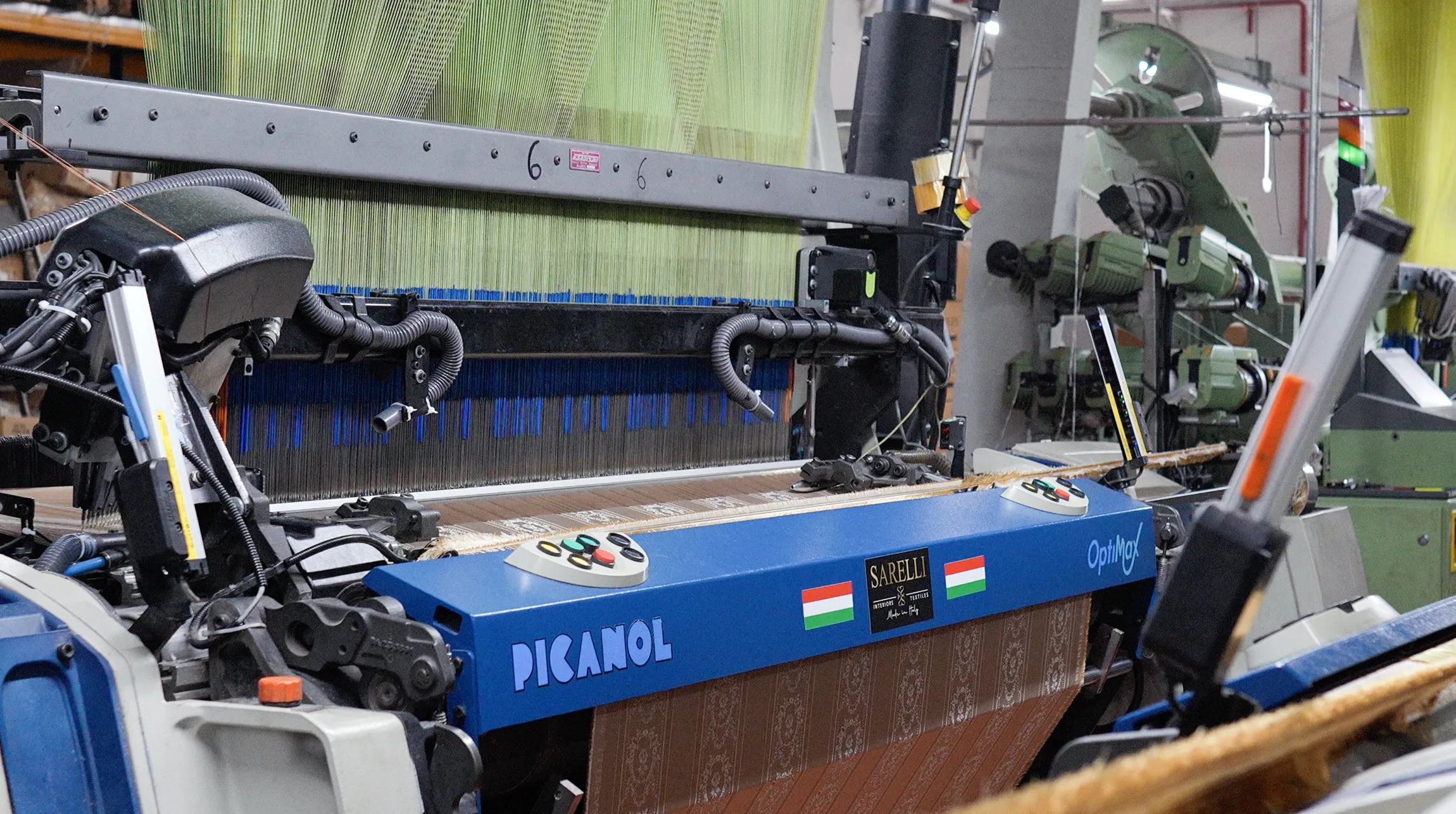
Stage 5: Jacquard Looms Weave Fabrics at 400 Picks per Minute
Weaving interlaces the horizontal weft threads with the vertical warp threads to create the fabric structure. Sarelli Textiles operates electronic Jacquard looms for complex floral motifs and Dobby looms for geometric patterns. The Jacquard looms insert weft threads at a rate of 400 picks per minute using air-jet insertion technology. High-density classical patterns weave at a slow pace of 0.5 to 2.0 meters per hour, requiring 25,000 weft insertions per linear meter. The weaving stage for production tissus exclusifs requires constant climate control, maintaining the weaving room at 65 percent relative humidity and 22 degrees Celsius to prevent silk thread breakage.
Stage 6: Finishing Treatments Stabilize Fabric Shrinkage Below 2 Percent
The finishing stage alters the physical properties of the woven fabric to meet interior design specifications. Sarelli Textiles applies fire-retardant chemical treatments to commercial fabrics to pass the EN 13773 European fire safety standard, adding 15 grams of weight per square meter. Technicians wash the fabric in industrial machines at 40 degrees Celsius to remove residual sizing starches. The fabric then passes through a stenter frame at 160 degrees Celsius for 30 seconds to heat-set the width at exactly 140 centimeters and stabilize the fabric shrinkage rate to below 2 percent. Certain sheer fabrics undergo a calendering process where heated rollers apply 30 tons of pressure to increase the fabric luster, a technique detailed in the Sheer Fabrics Production guidelines.
Stage 7: Quality Control Inspectors Reject Fabrics Exceeding 10 Penalty Points
Quality control inspectors examine every meter of finished fabric over illuminated inspection tables equipped with 5,000 Kelvin LED daylight bulbs. Inspectors look for weaving flaws, color inconsistencies, and structural defects. Sarelli Textiles employs a four-point penalty system where fabrics accumulating more than 10 penalty points per 100 linear meters fail the inspection and undergo recycling. The QC team verifies the fabric weight using digital scales, ensuring a 350 GSM velvet does not deviate by more than 5 percent, or 17.5 grams per square meter. Approved fabrics receive a certification stamp and enter the luxury fabrics collection inventory.
Stage 8: Warehouse Staff Prepare 50-Meter Rolls for Shipping
The final stage involves rolling, packaging, and dispatching the approved textiles. Warehouse staff wind the fabric onto heavy-duty cardboard tubes with a 7-centimeter internal diameter and a 5-millimeter wall thickness to prevent creasing. Workers wrap the fabric rolls in two layers of 80-micron polyethylene film to protect against moisture during transit, sealing the ends with tamper-evident tape. Sarelli Textiles ships standard orders within 48 hours of QC approval. Custom orders for large-scale Projects require a 12-week lead time from initial yarn selection to final delivery. Clients can view finished 10-meter sample rolls at the Sarelli Textiles Showroom or request specific yardage through the Contact portal for immediate dispatch.