
Savonnerie rugs feature a hand-knotted pile construction with a cut wool surface measuring 8 to 14 millimeters thick, while Aubusson rugs use a flat interlocking weave with zero pile. Buyers choose Savonnerie carpets for acoustic dampening and plush texture, whereas aubusson style rugs provide lightweight, reversible floor coverings suitable for high-traffic dining areas.
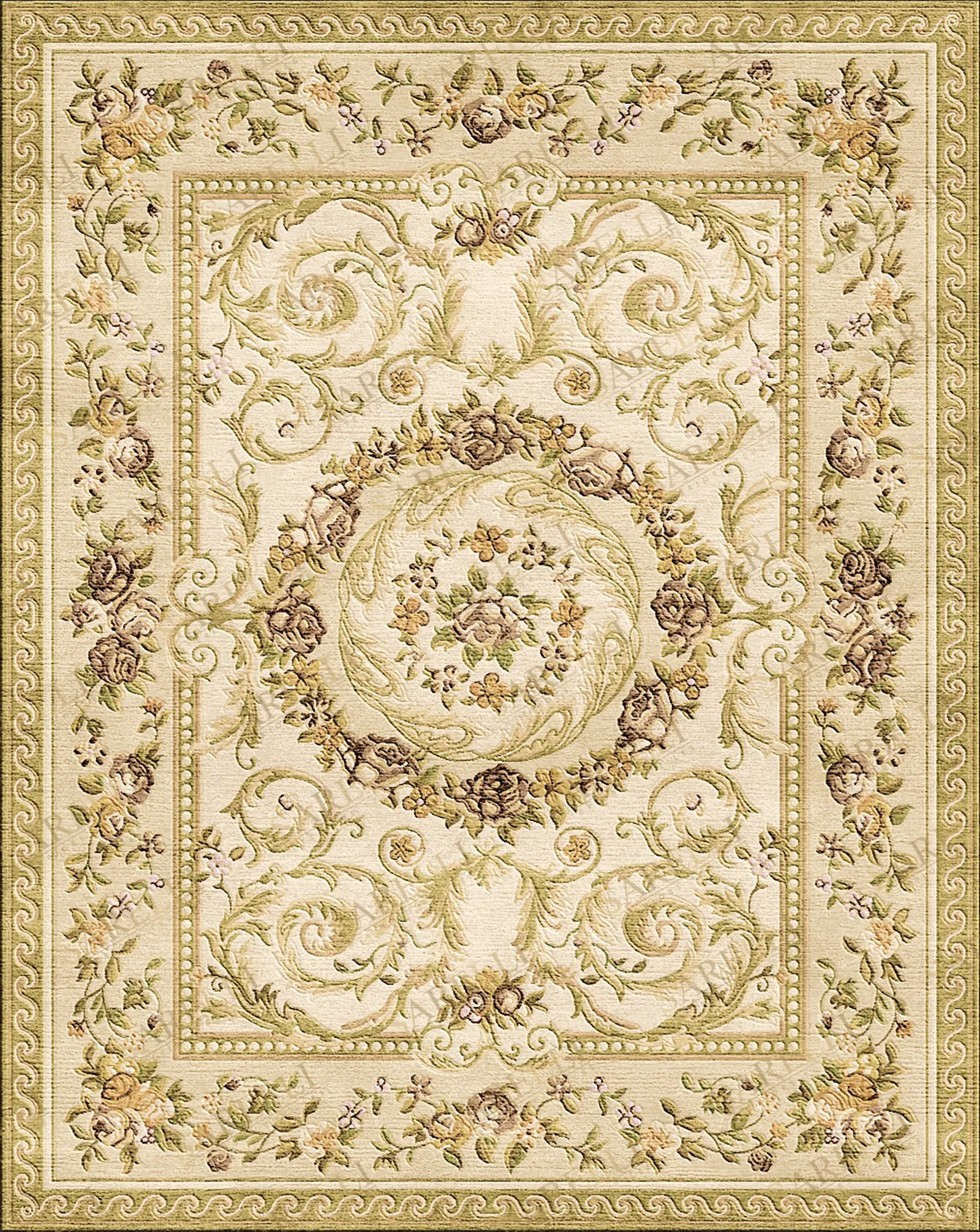
Difference 1: Construction method and pile depth
The primary distinction between a savonnerie carpet and an Aubusson carpet lies in the weaving technique. Artisans create Savonnerie rugs using the symmetrical Ghiordes knot tied around cotton or linen warp threads. The knotting process produces a dense pile that weavers shear to a uniform height of 8 to 14 millimeters. A standard Savonnerie rug contains between 60,000 and 120,000 knots per square meter. Conversely, weavers construct aubusson style rugs using a slit-weave flat-woven method. The Aubusson weaving technique interlocks weft threads over warp threads without creating any raised knots. The flat-weave construction results in a pileless surface measuring exactly 3 to 4 millimeters thick. Clients exploring Rugs & Carpets often select the knotted Savonnerie technique for bedrooms and the flat-woven Aubusson technique for dining rooms. Sarelli Interiors Textiles also replicates historic French aesthetics through contemporary Hand-Tufted Production methods, reducing manufacturing time by up to 75 percent, resulting in a 12-week lead time.
Difference 2: Surface texture and acoustic properties
The physical mass of the rug dictates the acoustic performance within an interior space. A hand-knotted Savonnerie carpet weighs approximately 4.5 kilograms per square meter. The dense wool pile of the Savonnerie carpet absorbs ambient sound, reducing room reverberation by up to 35 percent. The plush Savonnerie surface provides significant underfoot comfort, making designs like the French Savonnerie Floral ideal for formal sitting rooms. Aubusson rugs possess a rigid, canvas-like texture. An Aubusson carpet weighs between 1.5 and 1.8 kilograms per square meter. The flat surface of the Aubusson carpet reflects sound waves rather than absorbing sound waves. The lack of pile allows chairs to slide easily across the Aubusson rug surface. Buyers selecting Rug Materials must specify heavy wool blends if they require acoustic dampening from a flat-weave carpet.
Difference 3: Color palette and dye saturation
Dye application differs significantly between the two French rug styles. Savonnerie weavers incorporate 25 to 40 distinct dye colors into a single carpet design. The cut ends of the Savonnerie wool yarn expose the deeply saturated core of the fiber, creating a luminous color effect. Designs such as the Savonnerie Heritage Medallion display rich royal blues and deep crimsons. Aubusson weavers typically restrict the Aubusson color palette to 15 to 20 muted pastel shades. The flat-weave structure of the Aubusson rug displays the side of the yarn rather than the cut end of the yarn. Displaying the yarn side diffuses light, resulting in the soft pinks and pale greens characteristic of Aubusson textiles. Clients can request physical yarn tufts through the Sarelli Interiors Textiles Colors & Samples department to compare dye saturation levels directly.
Difference 4: Motif execution and design clarity
The structural grid of the rug determines the clarity of the woven motifs. The high knot density of Savonnerie carpets allows weavers to execute precise architectural elements, including three-dimensional acanthus leaves and trompe l'oeil moldings. The Savonnerie Rose Bouquet demonstrates the three-dimensional shading technique. Aubusson carpets feature stylized, two-dimensional motifs. The slit-weave technique creates stepped diagonal lines. The stepped diagonal lines prevent weavers from producing perfectly smooth curves. Aubusson designs frequently feature central floral medallions surrounded by open pastel fields and delicate ribbon borders. The Imperial Rococo Flourish exemplifies the airy, romantic aesthetic of traditional Aubusson motif execution.
Difference 5: Lifespan and maintenance requirements
The construction method directly impacts the functional lifespan of the floor covering. A hand-knotted Savonnerie rug boasts a functional lifespan of 100 to 200 years under moderate residential foot traffic. The 14-millimeter pile protects the structural warp and weft threads from direct abrasion. Savonnerie maintenance requires annual professional extraction cleaning to remove particulate matter trapped deep within the pile. Aubusson rugs offer a functional lifespan of 80 to 150 years. The flat-weave structure exposes the structural threads to direct friction. Direct friction makes Aubusson carpets more susceptible to wear in heavy traffic corridors. However, Aubusson carpets are fully reversible. Owners can flip designs like the Majilis Regal Aubusson or the Aubusson Garden Oval to distribute wear evenly across both sides of the textile.


SARELLI INTERIORS TEXTILES S.R.L.
CONTACT US
© 2026 SARELLI INTERIORS TEXTILES S.R.L. · llms.txt